Beijing
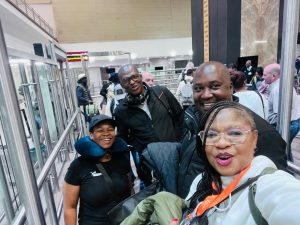
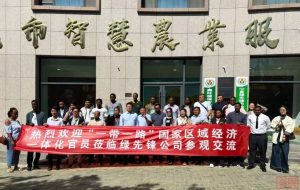
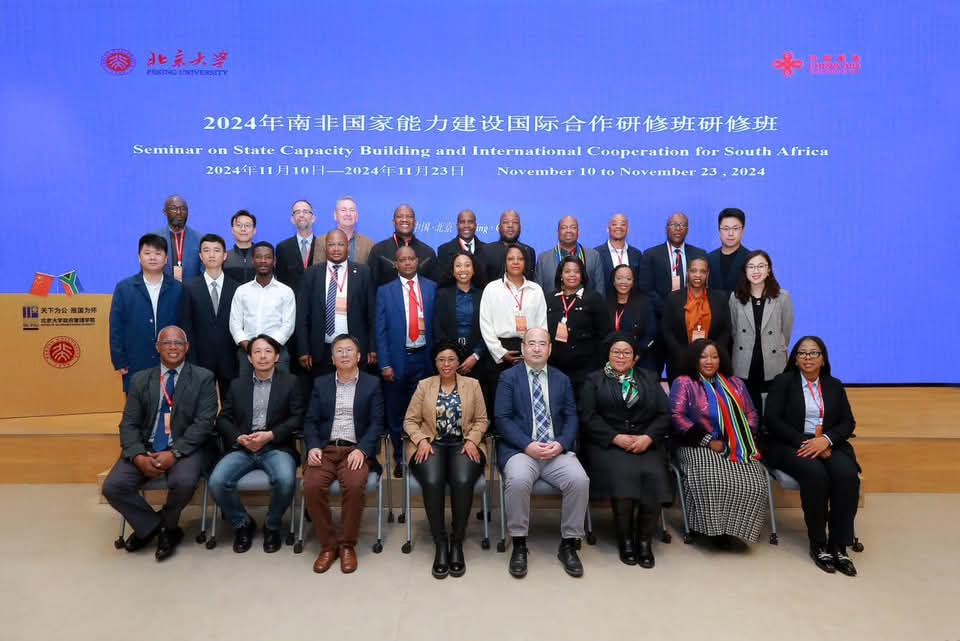
A fruitful Seminar on State Capacity Building and International Cooperation for South Africa was recently held in Beijing in the Republic of China. The seminar was delivered from 10 November 2024 – 23 November 2024 in partnership with Perking University. This seminar was made possible by Ministry of Commerce of the Republic of China.
The Seminar took place just weeks after China hosted a successful FOCAC Summit which once again committed to capacity building as a key driver to achieving sustainable development. Senior public servants, members of legislatures and councilors were invited to attend this Seminar aimed at further improving efficiency in governance run by the National School Government of South Africa in partnership with the Republic of China through Perking University School of Governance.
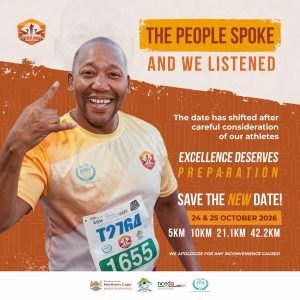
The Diamond & Dorings Kimberley Big Hole Marathon is back for 2026!
Get ready to experience one of South Africa’s most iconic races once again as
you run through the historic city of Kimberley and become part of an
unforgettable marathon tradition once again.
Diairise the 24th and 25th of October 2026!
We’re going bigger and better this year
The aim of the seminar was to build the governance capacity of participants by exposing them to China’s Governance system that has driven economic growth and development. The short course covered themes such as China’s Social Governance, China’s Five-Year Planning System, China’s Political System and Modernization of Governance System; History and Development of China’s Reform and Opening Up, China-South Africa Relations and Cooperation Prospects as well as the thoughts of President Xi Jinping on governance.
The course was delivered as part of the partnership and cooperation between South Africa and the People’s Republic of China in various fields including public administration.
In a statement the Northern Cape Provincial Government said it was quite an honour to be part of the two week proceedings. During this two week stay of friendly and mutual exchanges that took place in the context of the bilateral relations between the two peace loving countries, South Africa and China, whose relations date back to the fight against colonialism and hegemony, united in the pursuit of a just and equitable world order characterized by common peace, common development and shared prosperity towards what President Xi Jinping envisions as a “Community with a Shared Future for Mankind”. This is what in South Africa President Mandela and his fellow peace-loving men and women fought for, “A better Life for All”.
The Northern Cape Head of Communications Monwabisi Nkompela told The Pixley Independent, “Our understanding is that in order to build a united, democratic and prosperous South Africa, a better Africa and Better World, as we envision in our Constitution and South Africa’s Foreign Policy, we must build credible, dynamic and resilient public sector intuitions as instruments for Socio-Economic Transformation and Job creation that would unite our people, not only in South Africa but the whole world with spin-offs of peace and prosperity in the whole world. That any success is not purely dependent on ideology but state capacity.
“As Deng Xiaoping observed, it doesn’t matter whether the cat is black or white as long it catches mice. This dictum and observation remind us that in a world that is in constant movement characterized by domestic and global shifts, we must continue to reform and open up. Reform of the mind, reform of thought and seek pragmatism to come with solutions that serve the interests of our people on whose legitimacy we exist. To drive this point home, let me quote “always bear in mind that people are not fighting for ideas, for things in anyone’s head. They are fighting to win material benefits, to live better and in peace, to see their lives go forward, to guarantee the future of their children”. How do we achieve this? The answer is that we need to build strong capable institutions. This is central to the African Union Agenda 2063 and the United Nations 2030 Agenda for Sustainable Development.”
According to Nkompela what distinguishes ideologues from successful developmental states is State Capacity, in short statecraft, “We look forward to sharing these lessons in pursuit of the BRICS and FOCAC resolutions. The recent FOCAC Summit held here in Beijing in September 2024 culminated in a Joint Declaration and Action Plan and commits to cooperation in several areas including experience sharing on National Governance, Anti-Corruption Cooperation, Science and Technology Cooperation and Poverty Reduction among others. The joint declaration equally places the importance of building capacity in several areas including the development of capacity across various professions, aiming to enhance governance capacities, stimulate economic and social development, advance scientific and technological innovation to improve the well-being of the people. The Northern Cape appreciates that professional, well governed and capacitated institutions are key drivers for impactful and sustainable socio-economic transformation.”
Said Nkompela, “The Seminar and its topic, State Capacity Building and International Cooperation, is very important for us as we move towards our Premier’s Vision of “Building a Modern Growing Successful province” the year 2030 which is the year we have set for ourselves in the National Development Plan and the United Nations 2030 Agenda for Sustainable Development to end poverty and build an inclusive society which is drawn from our Constitutional mandate to build a united and prosperous South Africa.
‘’The Seminar served to contribute to building state capacity as we have prioritised in the National School of Government to use partnerships to expand learning opportunities and increase depth. it contributes to achieving the priorities of the 7th Administration of South Africa led by President Cyril Ramaphosa to attain inclusive economic growth and job creation and building State capacity to drive socio-economic transformation,” he concluded.