By Tebogo Monyo – 27/10/2026
It is a familiar scene on social media during election season. A government department posts about a newly completed housing project, a water infrastructure launch, or a clinic rollout, and the comment section fills with cynicism. Critics cry “electioneering” or dismiss the work as a cheap ploy for votes. Some, hunting for clicks, call it an “election gimmick” (“verkiesingfoefie”, they will say in Upington or Springbok).
But this pervasive scepticism feeds an unfair and dangerous expectation – that a legitimately elected government should abdicate its core constitutional responsibilities for fear of “bad timing” or negative public perception.
Section 26 of the Constitution obliges the state to progressively realise the right to access adequate housing. That obligation is continuous. The sceptic’s logic would have a department responsible for human settlements, the eradication of informal settlements and the housing backlog pause its mandate at certain intervals.
South Africa operates on a rotating electoral cycle. National and Provincial Elections occur every five years, and Local Government Elections follow at roughly the mid-term mark. The country is almost always approaching, in, or emerging from an election season.
Once new municipal councils are constituted after the 4 November Local Government Elections and settle into their work, the political parties will already be preparing for the 2029 national and provincial elections. If governments must slow down delivery whenever an election nears, we are asking the state to paralyse itself for significant portions of its term.
An elected government has a right and a moral responsibility to serve citizens before, during and after an election. Governance does not take a sabbatical because the Independent Electoral Commission is busy printing ballots.
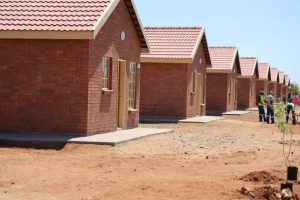
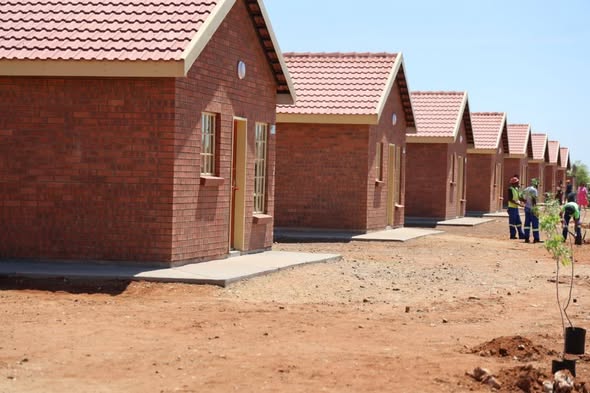
The human cost of pausing is easy to see. Mama Kealeboga Kgarane, an 80-year-old beneficiary, recently received the keys to her fully subsidised house in Deorham, in the Joe Morolong Local Municipality, after waiting more than 10 years. She cannot and should not be expected to wait a single day longer because an election is on the horizon.
She lived in a mud house that leaked badly in the rain, forcing her to collect water in buckets. Anyone who doubts the urgency should have been there on Friday, 4 September 2026, when she opened her door to security, comfort and the pride of owning a brick-and-mortar home.
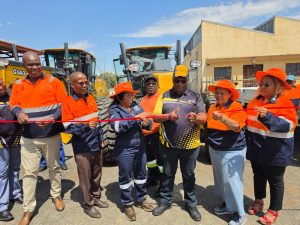
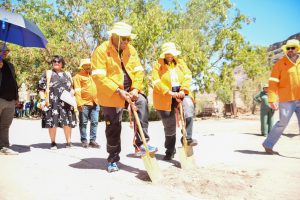
The launch of a R37.8 million water project in the Gamagara Local Municipality is no campaign stunt when it delivers clean, drinkable water to 7, 849 residents in 1,655 households in Dibeng.
The same goes for relief at the pump. With the country up in arms about the rising cost of fuel, Minister Godongwana announced a reduction in the fuel levy during the Medium Term Budget Policy Statement (MTBPS) to cushion the impact. It takes effect on 4 November, and the cynics cry “electioneering” again.
I am glad for the fuel levy reprieve. I am glad for Mama Kealeboga. I am glad for the thousands in Dibeng who will receive a clean, uninterrupted water supply.
To the cynical question “why now?”, the answer is another question: if not now, when? Once public funds have been appropriated and infrastructure is ready to change lives, delaying delivery to manufacture political neutrality is a disservice to the very citizens the state is mandated to uplift.
None of this is a case for the unlawful use of state resources for party-political gain. The difference between legitimate delivery and abuse of state resources matters, but we already have robust watchdogs to police it. We do not need to freeze service delivery to prevent corruption. We need to rely on our oversight institutions.
Two cases show these institutions at work. In April 2025, the Public Protector substantiated a Democratic Alliance complaint against then Free State Premier Sisi Ntombela over the allocation of an RDP house in Hillside View in 2022, proving that genuine concerns about the blurring of party and state are thoroughly interrogated.
In October 2022, by contrast, the Public Protector found no abuse of state resources for party-political gain in President Cyril Ramaphosa’s visit to Ouma Martha Louw in Donkerhoek, Kimberley. She had waited for housing since 2000, had her subsidy approved in 2004, received her keys on 30 September 2022 and was visited by the President the next day, as he was in the area for an ANC Letsema campaign, and Ouma Martha was celebrating her 82nd birthday.
Both outcomes show that checks and balances work. Where there is real evidence of state resources being weaponised for campaigning, legal and investigative avenues exist to hold leaders accountable, even when the allegation involves the country’s first citizen.
Conflating routine, mandated governance with electoral opportunism hurts ordinary South Africans most. It stalls progress, breeds unnecessary suspicion towards essential milestones and paralyses public administration.
Elections are a cornerstone of our democracy, but they are a mechanism for choosing who governs, not a licence to stop governing. The state’s obligation to deliver water, shelter and dignity to its people is permanent, unwavering and immune to the political calendar.
*Monyo is a communication practitioner and writes in his personal capacity. He holds an LLB and a degree in Communication Sciences. His views are not those of his current or former employers or any associated organisations.